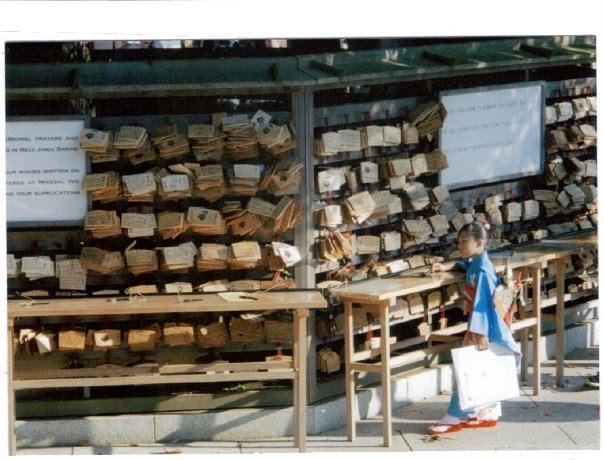
Japanese Prayer Wall

Japanese Prayer Wall

Wednesday, September 12, 2012

A Season for Everything


“There is a time for everything, and a season for every activity under the heavens” (Ecclesiastes 3:1).

Soon the trees will be full of bright fall colors.  Then, the leaves will gently fall to the ground, one by one.  These leaves remind us of the passing of time and the transition from one season to another.

Sometimes I find myself resisting change or grumbling, “Why can’t everything just remain the same?”  There are times when the stress of changes seems overwhelming.  Change and transitions can be uncomfortable at times, especially when so much is beyond our control.  We don’t have control over the change from summer to fall, fall to winter, winter to spring, or spring to summer.  In the same way, often we don’t have control over the struggles and challenges in our lives.  Our problems can become bigger than anything we can handle alone.

No matter what seasons of life we are in or what difficulties we face, there is one constant—God.  Not only does God guide us through times of transitions, but he also shows us beauty and growth along the way.  Ecclesiastes 3:11 tells us that “[God] has made everything beautiful in its time.” 

This year, when we look at the beautiful fall colors, let them remind us of God’s constant love and provision during times of change.  God WILL bring beauty into our current seasons of life, just wait and see.

Friday, August 17, 2012

So, tell me about Japan...

This is dedicated to all the people who have lived abroad or know someone who has lived abroad.

This summer I returned from Japan for a visit.  People’s questions seemed to fly at me from all directions.  Over and over I heard one comment that drove me crazy—tell me about Japan.  The people usually meant well, but every time I heard that, my mind went blank.  We’re talking deer in the headlights.  I didn’t know where to start.  How do I even begin describing a whole country and culture?  Does the person want an hour long lecture, or are they just trying to be polite?
The awkwardness didn’t stop there though.  I had my mouth open at the dentist’s office when the dental hygienist asked, “So, you’ve lived in Japan for a while now.  Do you speak Chinese?”  Are you serious?  Really?!  I had to control myself as I casually replied, “I can speak some JAPANESE, but I’m still not very good at it.  It’s a really hard language to learn.”  The sad part is that this wasn’t the first time someone has asked me that.

I do appreciate people showing an interest in my life and work abroad, but let’s find a way to do this more intelligently and thoughtfully.  Everyone involved will walk away much happier.

Here are some strategies and ideas for asking people questions about their life abroad.
1.    Be specific.  Think about one aspect of the country or culture that you want to know about, and form that into a question.
2.    Ask probing questions.  The deeper your question is, the more likely you are to receive an insightful answer.  Yes/No questions really only work if you have a follow-up question.  For example, avoid asking simply, “Do you like living abroad?”  Change that question, and instead ask, “What do you like best about living abroad?”
3.    Be sensitive to other cultures and customs.  It’s easy to fall into the trap of thinking one’s own country has the “right” way or “best” way of doing things.  You probably don’t realize it, but even questions about driving on the wrong side of the road suggest that Americans know which side is correct. 
4.    Avoid stereotypes.  Any time you ask a “Does everyone…” question, you are setting yourself up to look foolish.  No matter what country you go to, people think, believe, and behave differently.

Here are some questions that might inspire more in-depth conversations.  I’d enjoy hearing about some of your ideas too and possibly expanding my list.
·       What does a typical week look like for you?
·       What is your favorite place that you’ve visited?  Why?
·       Where do you still hope to travel in (insert country name)?
·       What surprised you most about (insert country name) when you first moved there?
·       What is the most popular holiday in (insert country name)?  How do people usually celebrate that holiday?
·       Who is someone that you’ve gotten to know well since you moved to (insert country name)?  Tell me about him/her.
·       What new foods have you tried there?  What foods from (insert country name) have you learned to cook?
·       What are the biggest challenges you face living abroad?
·       What experiences have you faced with culture shock or reverse culture shock?
·       What misconceptions did you have about (insert country name) before you lived there?
·       How are people in (insert country name) doing after the recent problem with (insert natural disaster or other difficulty that you may have learned about from the news)?
·       What can I do to help support and encourage you while you’re living abroad?
·       How have you changed as a result of your time in (insert country name)?
·       What are you going to miss most about (insert country name) when you move back?
·       What advice would you give someone who is thinking about moving to (insert country name)?

The person you know who has lived abroad might not be able to answer all of your more probing questions, but that’s okay.  I still have a lot to learn about Japan, but I always smile when I can say, “I don’t know, but that is a really good question!”
Wednesday, June 6, 2012

What does faith mean to you? Adventures of a Word Detective--Part 2


What does faith mean to you?  How would you explain faith?

Recently I wanted to get a glimpse of what faith means to Christians in Japan, so I started by looking at the word itself.  Faith in Japanese is shinkou.  The first kanji means to believe, and the second kanji means to respect or to look up to someone.  In other words, faith is rooted in belief and respect for someone or something.  Some people put their faith in money, but when the stock market crashes, they quickly discover how dangerous that can be.  Some people put their faith in family or a spouse, but even humans with the best intentions can let us down or disappoint us.  There is only one who doesn’t change or disappoint us: “Jesus Christ is the same yesterday, today, and forever” (Hebrews 13:8).

Faith (Shinkou)
When I started thinking about the kanji for faith, I asked a few teachers in my office for help.  (I wanted to make sure that I understood the meaning before I tried to explain it to someone else.)  One helpful teacher was Matsumura Sensei because he is a Japanese Christian who teaches English, and he’s an all-around nice guy.  He told me about being a part of the school religion club when he was a student.  Reverend Fujii told him a powerful acronym to remember the meaning of faith, and decades later, Matsumura Sensei still remembers it.  FAITH

Forsake

All,

I

Take

Him.

So, where do you put your faith?  What are you doing and saying today that people will remember decades from now?

Tuesday, June 5, 2012

Another Inspiring Japanese Christian

Here's another chapel speech that I wrote about an inspiring Japanese Christian...

Today’s Bible reading is from 1st Peter 4:10.  “Each one should use whatever gift he has received to serve others, faithfully administering God’s grace in its various forms.”

Have you ever heard of Chiune Sugihara?  He was an amazing man who changed the lives of thousands of people.  He was born in Japan in 1900 and worked for the Japanese Foreign Ministry.  He started working for the Japanese government in foreign countries because he was good at learning languages.  He became a Christian in the 1920s.  Then, he moved to Lithuania in 1939.

Chiune Sugihara
World War II changed Mr. Sugihara’s life, and the lives of many others, in big ways.  The Nazis wanted to kill Jewish people, so many Jews tried to escape to other countries.  They needed visas to enter countries, so they came to Mr. Sugihara for help.  It was dangerous, and he could lose his job for helping the Jews, but he was moved by their tears and tired faces.  Some days he worked 18 to 20 hours writing visas.  Mr. Sugihara wrote travel visas for more than 6,000 Jewish refugees.  Today, around 40,000 descendants of the Jewish refugees are alive because of his actions.

40 years later, one pastor said that Mr. Sugihara had become his role model.  Mr. Sugihara’s family said that Sugihara helped the Jews because of his Christian faith.  Then the pastor felt inspired to help people too.  The pastor went on to say, “Here’s a man who did not take the comfortable road, who reached out beyond himself and did something sacrificial in providing service to others at the expense of himself.”

Your life is different from Mr. Sugihara’s, but you can make a difference in the world too.  Every time you help one person, it inspires them to help someone else.  Then, the person they helped wants to continue helping others.  It’s like when you drop a stone into water.  One action causes a ripple that causes another and another and another.  So, what can you do today to start ripples of helpfulness and kindness?
          
Let us pray.  Heavenly Father,
           Thank you for amazing people like Mr. Sugihara.  Open our eyes, and show us how we can help others.  Help us share your love and hope with others.  In your name we pray, amen.


Monday, May 7, 2012

Are you getting your daily dose of manna?

April flew by in a whirl of activity, and I hardly know where the time went.  Since we have year-round school in Japan, April marked the start of a new school year.  This year my school has 347 junior high students and 1052 senior high students.  I teach kindergarten, junior high, and high school classes each week, and the variety of levels definitely keeps me busy.  I am still working on remembering my students’ names and the names of all the new teachers, but I know that will take time. 

Once again this year, my school participated in the Missoula Children’s Theatre program, so that gave me a great opportunity to get to know some of my students outside of a classroom setting.  This year’s production was a musical version of “Little Red Riding Hood.”  I am proud of everyone’s hard work, but more importantly, the students had fun.  I loved cheering on my students and celebrating their personal victories.

The 2012 cast of Red Riding Hood

In the midst of all this busyness, God reminded me of how important it is to stay focused on him.  It is so easy to get swept up in to-do-lists and all the details of life.  I admit that when I get really busy, I often fall into the trap of not taking quiet time alone with God.  I try to rationalize this decision by telling myself that God will understand and that there is just too much to do during a day.  What I fail to realize is that when I take the time to focus on God and soak up his truths from scripture, suddenly I have more strength and energy to accomplish that mountain of tasks I face.  I have more patience with myself and others when things don’t go as planned.  When unexpected crises arise, God’s words are already in my heart and ready to comfort me. 

God constantly provides for us and sustains us through the ups and downs in life, but just like the Israelites, we need to receive our manna from heaven each day.  Instead of living off of the encouragement, hope, strength, and sustenance that God gave us yesterday, Sunday, or last week, we can receive a fresh helping of God’s goodness each and every day.  Lamentations 3:22-23 reminds us that “[b]ecause of the Lord’s great love we are not consumed, for his compassions never fail.  They are new every morning; great is [God’s] faithfulness.”  So, what does God want to teach you today?  Will you take the time to listen?

Saturday, March 10, 2012

One Year Later...A Prayer of Hope

On March 11, 2011, the Great East Japan Earthquake devastated Japan.  The tsunami and fires consumed homes, schools, and lives.  It is confirmed that 15,786 people died in this disaster, and 161 minors are still listed as missing.  As we remember this tragedy and mark its one year anniversary, let us join together in prayer.

Heavenly Father,

We cry out to you on behalf of all the peopled impacted by Japan’s earthquake and tsunami.  Even now, so many people are suffering and in pain as they grieve.  Send your peace to surround those who have lost loved ones, homes, and a sense of security.  Let your hands still the tectonic plates and calm the earth’s movements.  Take away the intense fear that survivors feel as they wonder when the next earthquake will strike and whether or not it will be a big one.  Send your hope and comfort as people rebuild their communities and lives.  Help the people of Japan to feel your love surrounding them during this time.

In your mighty name we pray, AMEN.

Tuesday, February 14, 2012

Adeventures of a Word Detective

Now we are entering the season of Lent and are focusing our eyes on the cross.  Recently, at Bible study, I had the experience of explaining Lent to someone who is not a Christian.  I said that Lent is a time to remember how Jesus died on the cross; this sacrifice made it possible for people to know God better and to be with him after they die.  It is sad because Jesus had physical and emotional pain, but the story didn’t end there.  On Easter we celebrate how Jesus rose again.

After this experience, I grew curious about how Japanese Christians view Lent.  Although Lent is not well-known in Japan, Lutherans here do often know about its meaning.  The word for Lent in Japanese is jyunansetsu.  It is made up of three kanji (pictures that symbolize words or parts of words).  The first kanji means to accept, the second means hardship, and the third means a period of time.  Together, in Japanese, Lent means to accept hardship for a time.  I love that image because it reminds us that suffering and hardships are only for a time and that there is an end to the difficulties.  Jesus suffered tremendously, but his glorious resurrection put an end to his pain and provided and eternal solution to suffering.  So, whatever challenges, pain, or difficulties you are experiencing, know that the end is in view.  “Because of the Lord’s great love we are not consumed, for his compassions never fail.  They are new every morning; great is your faithfulness” (Lamentations 3: 22-23).
The kanji for Lent